
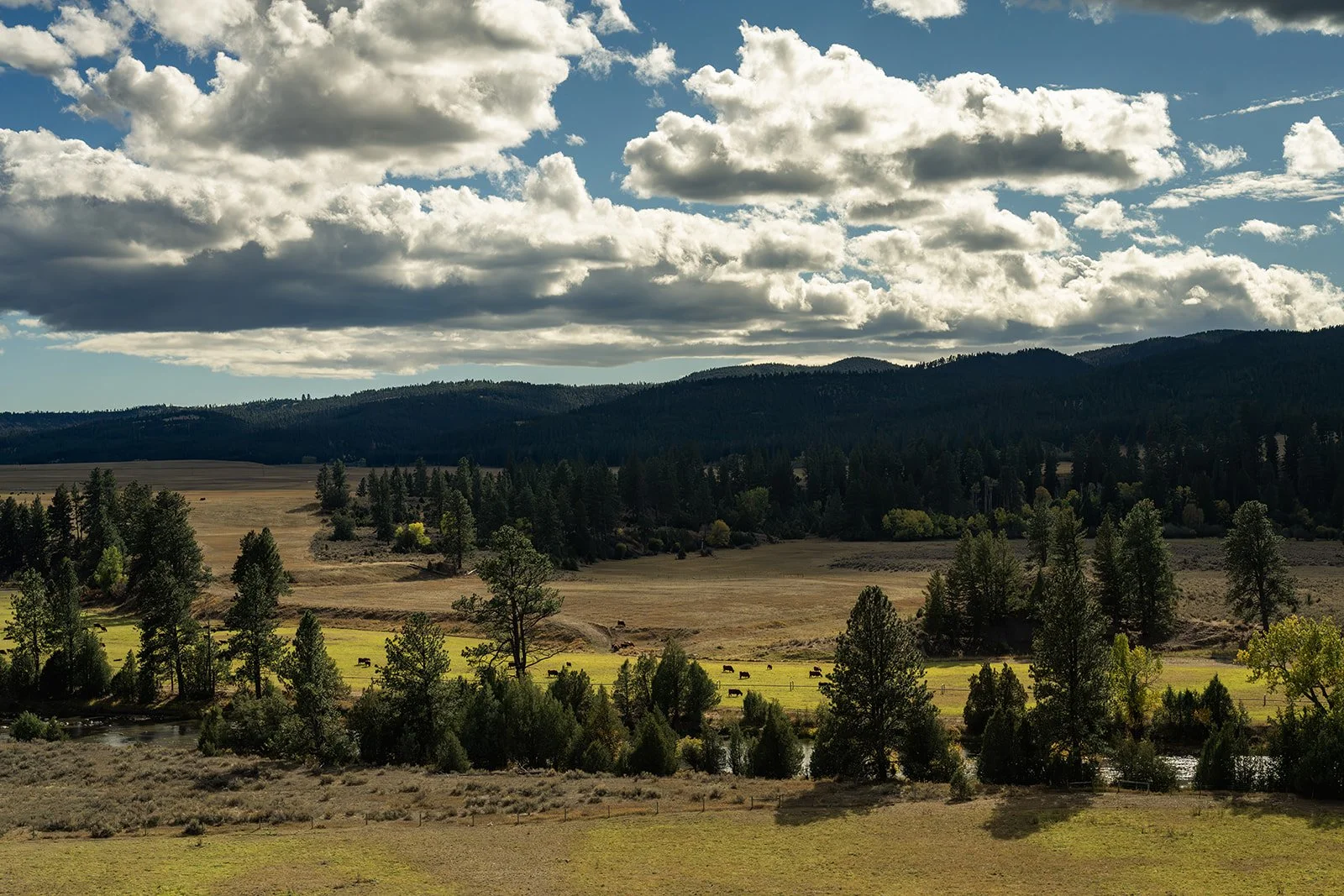
Stewards of this land since 1990.
Sustainability on the Ranch
Here at Meyer Company Ranch, we take our sustainability practices as seriously as we take any of our other practices. We sustainably manage and co-exist with the natural resources and ecosystems that are abundant on our ranch. We don’t just invest in sustainability to produce the best possible cattle, but to be good stewards and inhabitants of our land.
We continuously research, develop, and implement what we find to be the best practices regarding sustainability and land stewardship. We are constantly observing, adapting, responding and planning for not only the ‘good years’ but also years of extreme climate conditions. Some of the sustainable practices we are the most proud of include:
Using rotational grazing systems to ensure cattle are only put on pastures with sufficient grass and moving them to new pastures before overgrazing happens.
Developing cattle-friendly water gaps wherever possible and fencing off other areas to prevent destruction of stream banks.
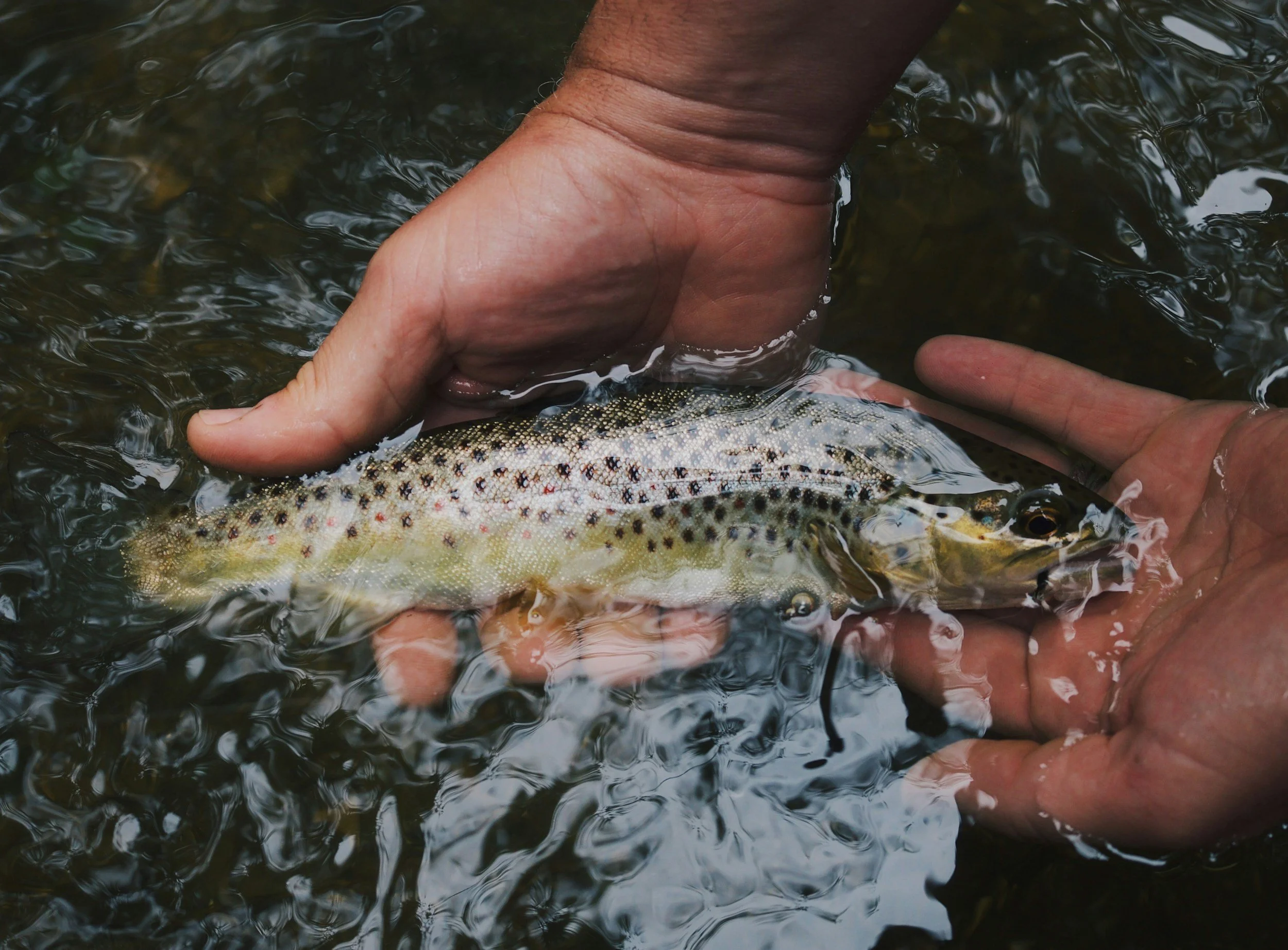
Stocking ranch ponds with native cutthroat trout
Utilizing horses as much as possible for our work
Reduced water usage in drought times
Rotating crops and utilizing cover crops
Selective logging practices to reduce pest infestations and fire hazards with minimal negative ecological impact thanks to the expertise of our on staff licensed forester
Planting native trees and plants to control erosion and encourage biodiversity
When done right, ranching can greatly improve and facilitate the cycle of nutrients from soil to plants to animals.
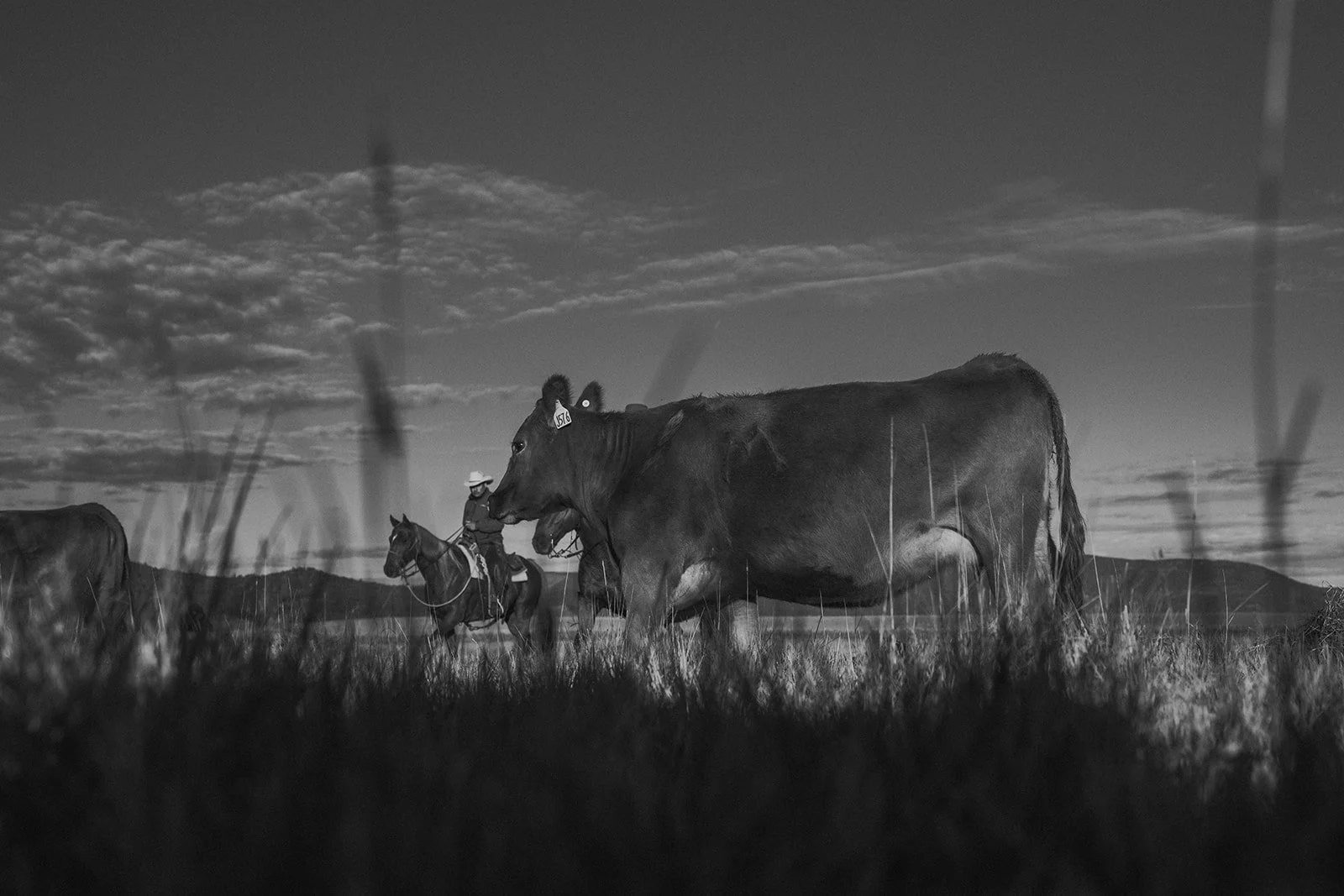
Farming & Cattle Nutrition
Crops & Hay: Our animals are on a completely plant based diet, as Mother Nature intended. Our cattle are fed alfalfa, grass hay and triticale hay during the winter. It is an excellent source of roughage for our cattle and provides them with their much needed nutrients in the harshest times of the Montana winter.
By rotating crops and planting cover crops we can replenish soil nutrients, reduce noxious weeds and prevent soil erosion. Some of our go-to cover crops are radishes, corn, turnips, and rye grass. Not only are they excellent forage, they work well to root deep into the soil, helping avoid and break up soil compaction and increase nitrogen levels.
Nutrients & Minerals: Throughout the year we have our soil and forage tested for nutrients. We use this information to find out what we are deficient in and are able to supplement both the soil itself and the cattle to ensure we end up with the highest quality beef possible. Nutrient levels in their feed are crucial to their overall health, and we supplement with a custom balance mineral mix for optimum health.
Soil Health: We understand that to produce the best steaks for your plate, we have to start at the soil. We balance having the smallest physical footprint on the landscape as possible while actively maintaining our soil health through various techniques. We use organic matter created by our cows, along with cover crops, fertilizers, and retained plant matter to optimize soil health and put nutrients directly back into the earth. Our fertilizer and manure use is found both in our pivot fields and grasslands pastures. These zones act as reservoirs for nutrients and helps increase nutrient exchanges and moisture retention.
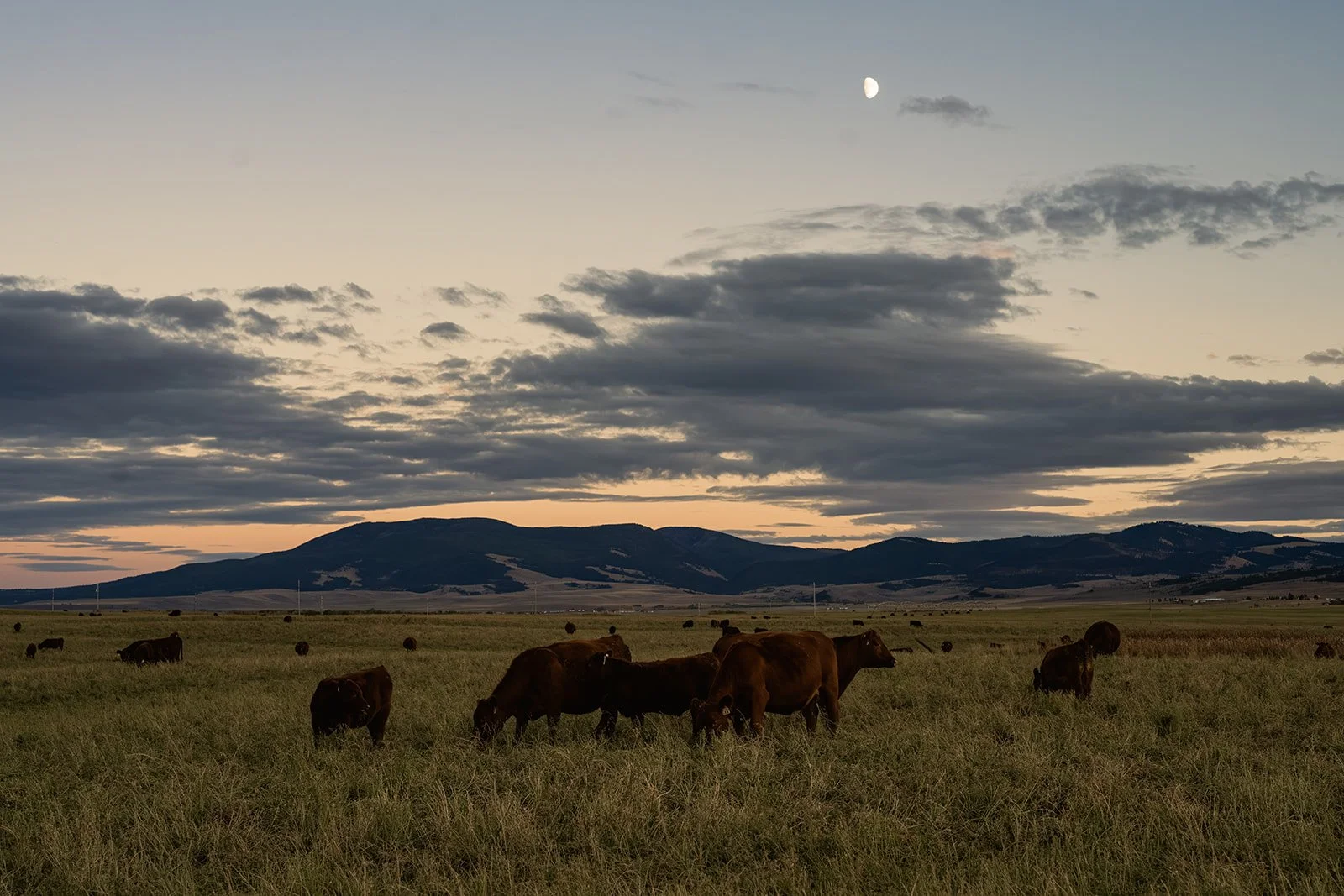
Irrigation
Like many things in life, there isn’t a one size fits all solution to irrigation on the ranch. We use different methods tailored to the soil types, water rights, and weather conditions of a specific zone. Here are some of our irrigation methods you’ll see across our fields:
Hand lines – Sprinkler systems that are moved around by hand.
Flood Irrigation – A system of ditches combined with portable dams made from tarps to run water over the fields.
Wheel lines – Somewhat portable irrigation systems that are set for a specific length/period of time and then moved using a set of wheels.
Pivots – Also called a center pivot, is a large stationary irrigation system that is capable of irrigating in a circular pattern.
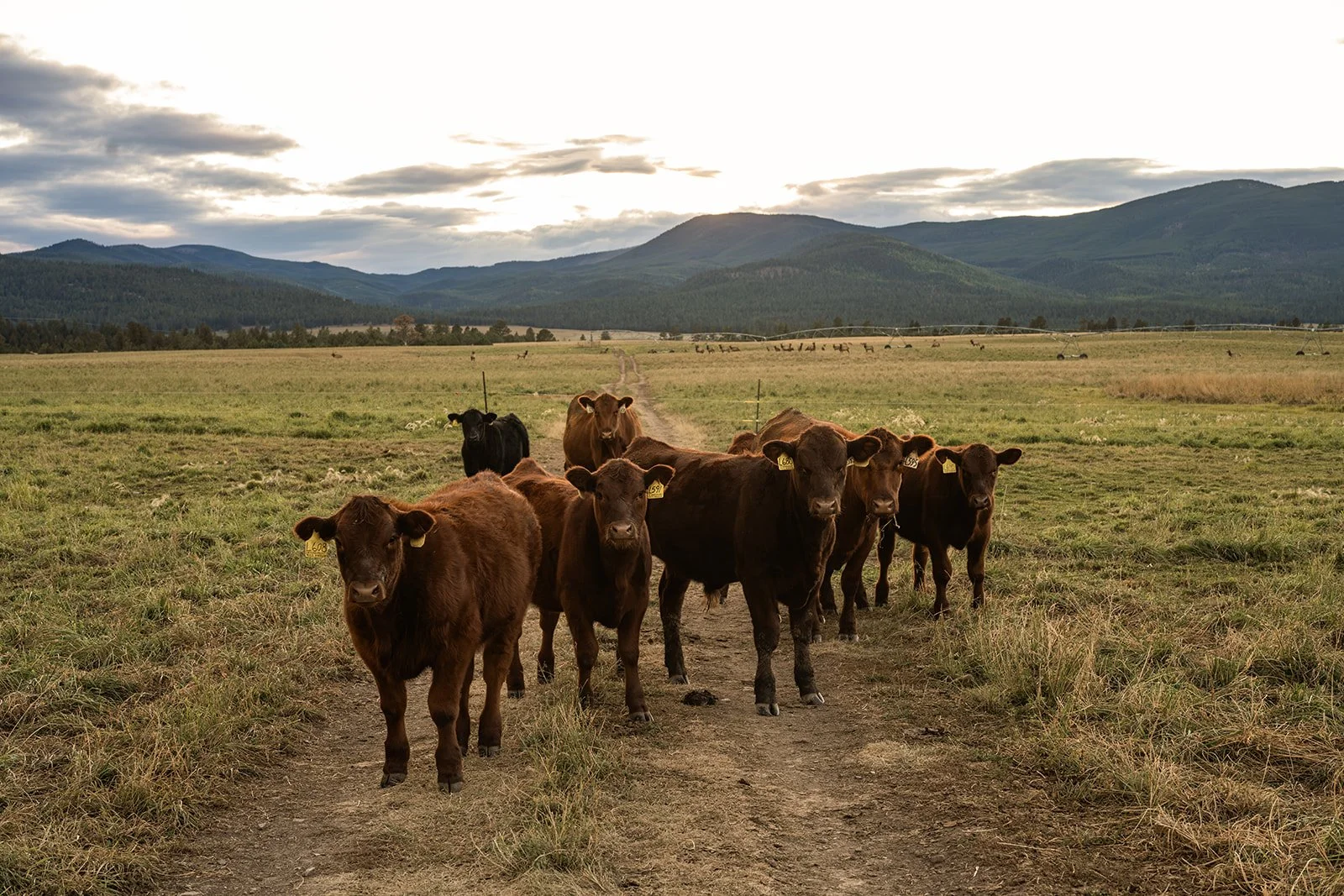
Ranching with Wildlife.
Sharing the Land.
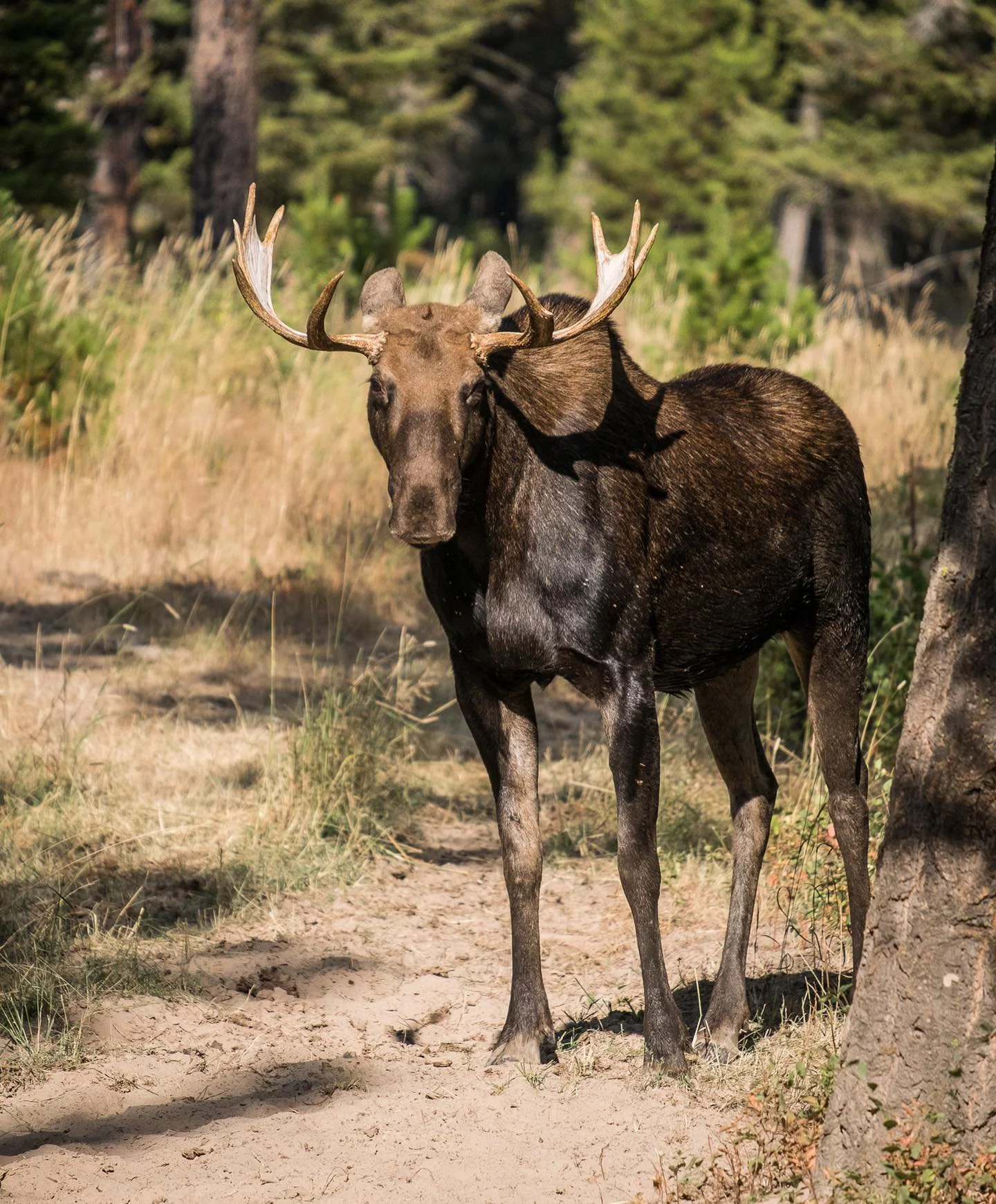
Standing in the pasture, the low murmers of the cattle is not the only sound you hear. Elk bugling in the fall, wolves and coyotes howling at night, and birds song mix with the sounds of our cattle, all living in harmony with each other. We have worked incredibly hard to create a ranch that is mindful of the ecosystem it inhabits.
Our wildlife numbers are healthy and we see a diverse population of animals and birds throughout the year. We employee a licensed outfitter to oversee our wildlife herds and determine what management strategies are needed or could benefit the wildlife overall.
We stock native cutthroat trout in our ranch ponds and take protecting the waterways from overuse by cattle seriously. We are lucky to have the famed Blackfoot River meander through the ranch and work hard to keep it pristine. Norman Maclean, author of A River Runs Through It wrote of the Blackfoot River “Eventually, all things merge into one, and a river runs through it. The river was cut by the world's great flood and runs over rocks from the basement of time. On some of those rocks are timeless raindrops.”
Weeds
Whether you have a few sections of land or suburban back yard, you’ve likely entered a battle with weeds at some point.
Weeds occur in nature but are spread by equipment, people and animals, both wild and domestic. Overgrazing by cattle is a significant cause of weed and invasive plant problems across the West. Knowing this, we are highly sensitive to the problem and make sure that our cattle are rotated to new pastures regularly, while still leaving ample forage in the pasture they came out of.
The best way to get rid of weeds is to stop weed growth, which is easier said than done, especially at the scale we operate at. Therefore, we will occasionally use chemical control methods with the guidance of professionals.