
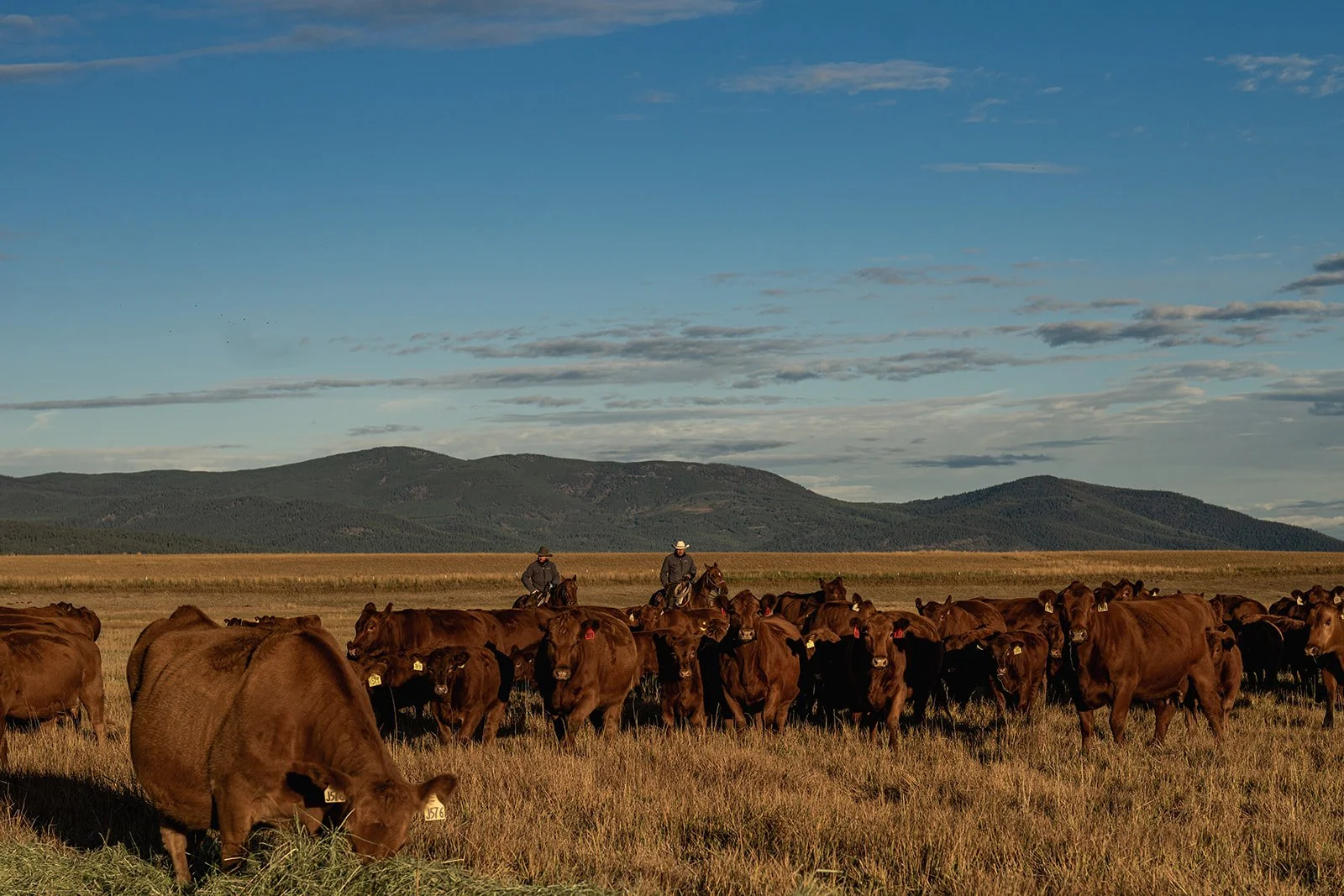
Our operating philosophy is simple: humane treatment of the animals and the land results in better beef,
by nature.
It may seem like we do things a little old fashioned around here, but we are doing things in the most humane and natural way possible. We handle our cattle with care from the moment they are born. From working on horseback to using specially designed corrals and pens that work with the cows instincts, not against them, we are committed to always using the best practices available, new or old.
Our Humane Operations
Calving
We aren’t ones to do things a certain way just because others are doing it or it’s trendy. We do things the way we do because it aligns with nature, our landscape, and our cows. We start calving later in the spring, starting in late April and running 45 days, to ensure our calves are born on green pastures as opposed to dirt lots. Well, we try for green pastures. It is Montana after all and you never know when a late spring snow may come through, regardless our cows are much more comfortable in the pasture than they are in lots—lower stress, better well being, better final products.
We use the Sandhills Calving System, which we have found to be integral in reducing sickness and mortality in newborn calves. In a nutshell, the Sandhill concepts are:
Calving in larger pastures rather than high density lots
When cows first start to calve, keeping them out on the pasture for one to two weeks. No later than two weeks we move the cows who haven’t calved yet (heavies) and leave the cow/calf pairs in the pasture.
We move the heavies once a week for subsequent weeks until they calve. We don’t combine groups until the youngest calf is at least four weeks old, to reduce the risk of neonatal diarrhea.
The Sandhills Calving System is based in science and attuned the natural cycles of cattle. Cows calving in clean pastures and preventing direct contact between younger and older calves limits exposure of later born calves to dangerous pathogens.
Branding
On branding days, we start early with a pot of hot coffee and take advantage of the cool Montana mornings, for less stress on the cattle and our crew. Besides putting our MCR brand on any new calves we have, branding is an excellent opportunity to look over each cow for health issues and give them needed yearly vaccinations.
We pull in small groups of cow/calf pairs at a time and sort the cows from the calves. We work through each pair concurrently to ensure that we are minimizing their time apart. Each cow and calf gets vaccinations for different preventable diseases and dewormed, any male calves are castrated. As soon as the pairs are finished they are put back in the pasture together—the cows and calves are quick to reunite and go back to enjoying their grazing.
We finish the day on horseback, riding through the herd to make sure that each cow and her calf are paired back up. We check for any issues that may have arisen from the vaccinations or other procedures done during the day.
Weaning
Starting in mid-October we wean out calves from their cows. The exact date varies depending on the weather and other conditions, but it is always within the first year of the calves’ lives.
We aim to primarily fence line wean. Fence line weaning is a low-stress method of weaning where we simply move the cows into the neighboring pasture, keeping the calves in their original one. When done correctly, neither cow nor calf notices much of a change. After a week or so, the calves are brought into the ranch for back grounding.
Back grounding is the process of feeding the calves in large pens twice a day while monitoring from horseback for illness or other problems. We keep them here for approximately 45 days until it is time for them to be moved off our ranch and onto the next step of the Meyer Natural Angus program.
Before the calves leave our ranch, we evaluate and choose replacement heifers. It’s exactly what it sounds like, new female cows are chosen to replace older cows that have ‘fallen out’. Heifers can fall out for many reasons, but age and fertility are the main ones. The number of replacements we hold back each year varies depending on the number of heifers we have fall out.
Record Keeping
Record keeping is very important to our operation. From our day to day work to overall ranch management, keeping concise and easy to access records helps us keep things running smoothly.
With our cattle herd record keeping, we use AIMS (Angus Information Management System). AIMS is a program put out by the Angus Association of America and we have found it to be the most comprehensive option for our ranch. We keep track of all of our cattle in AIMS and record everything from calving and breeding to weights and other health metrics. We employ the use of tablets in the field so the information is always available to us when we need it.
The Bud Box
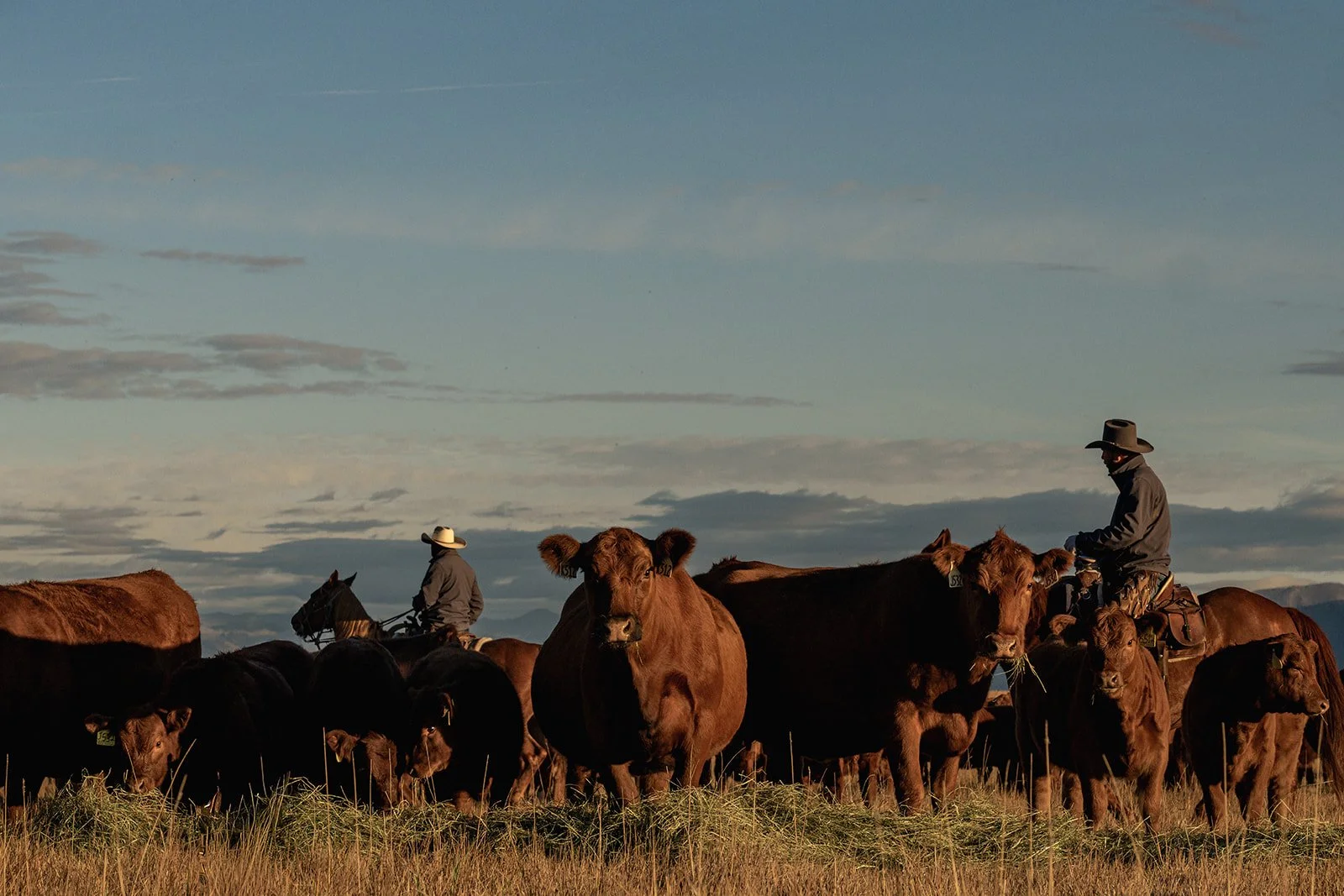
One of our favorite innovations to use on the ranch is the Bud Box. The Bud Box was invented by Bud Williams with the idea being that we must work with cattle’s natural instincts, not against them. We must understand two important cattle behaviors in order to use the Bud Box effectively. First, when blocked, cattle want to return to where they came from and second, animals prefer to go around something that they are feeling pressure from. The Bud Box can be used on foot or horseback, as seen in the video here.
The Silencer Chute
Let us start off by saying that not all cattle chutes are created equal, which is why we feel the silencer chute deserves it’s own recognition in regards to humane handling. The chute is quiet so it does not scare cattle, it is quick, easy to use, and it doesn’t choke an animal. It’s a safe and low-stress way to handle the cattle.
Antibiotics & Doctoring
There are times—no matter how much we try to prevent sickness—that an animal needs doctoring. To minimize suffering for an animal, sometimes, we must administer antibiotics. Those treated animals are marked with a green ear tag, recorded in AIMS, and culled separately from the rest of the animals to ensure that they do not end up in the Meyer Natural Angus program.